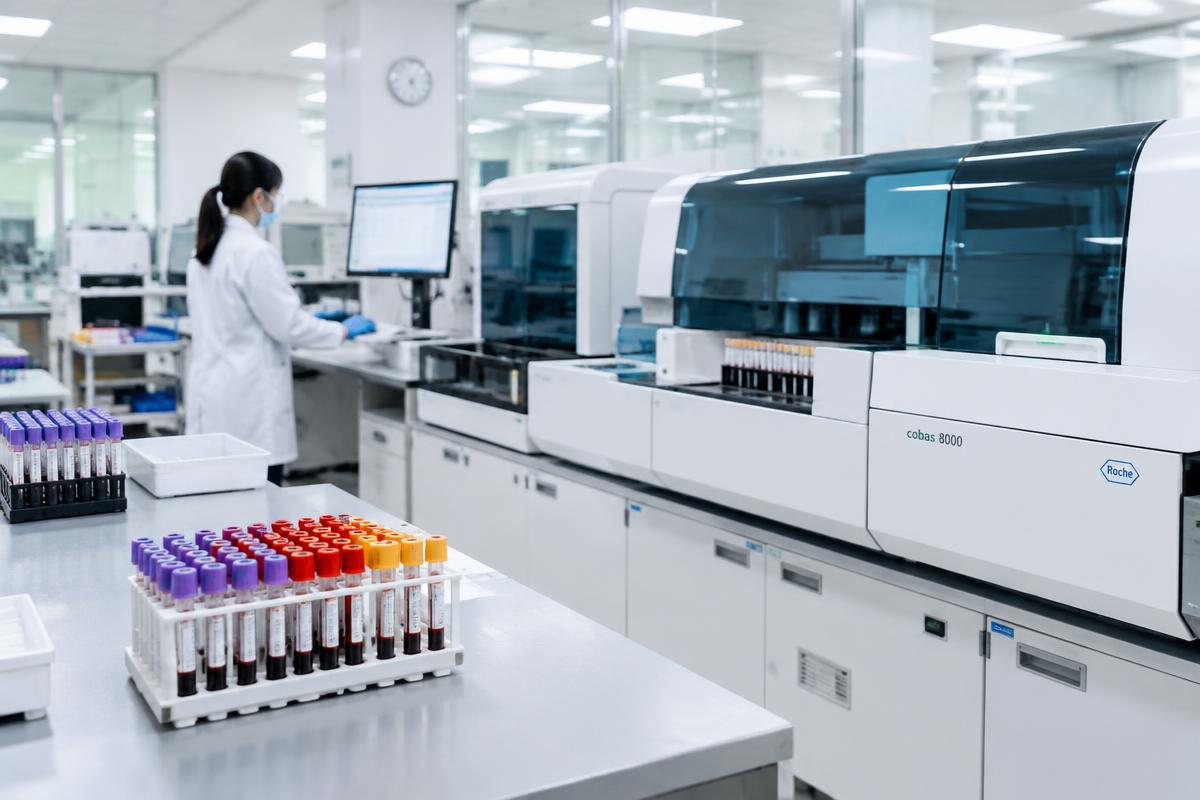
Industry
Diagnostics market research
Lab, point-of-care and molecular diagnostics market research.
HealthcareMarketResearch runs diagnostics market research for global leaders, challengers and investors. Our 5,000+ researchers include practising clinicians, procurement leaders, payers and former executives from the diagnostics industry.
Studies combine expert calls, qualitative interviews and quantitative surveys, so you can size the opportunity, understand stakeholders and plan go-to-market with confidence.
Topics we research
- Lab director insights
- Test menu strategy
- Reimbursement
- Instrument placement
Relevant services
At a glance
Diagnostics market research at a glance
The audiences, methods and timelines a typical diagnostics study runs on.
- Audiences
- Lab directors and pathologists, lab managers and technologists, molecular and genomics leads, point-of-care coordinators, referring clinicians, procurement heads and reimbursement specialists
- Typical methods
- Expert calls, lab director interviews, test menu and workflow mapping, instrument evaluation interviews, referring clinician surveys
- Research focus
- lab director insights · test menu strategy · reimbursement · instrument placement
- Geography
- 100+ Indian cities, metro and tier 2, plus global peer benchmarks
- Expert matching
- 24–48 hours from a confirmed brief
- Fieldwork window
- 5–10 business days for most interview and survey studies
- Core outputs
- Test menu priorities, instrument placement and pull-through logic, workflow constraints, reimbursement barriers and channel recommendations
- Regulatory context
- Studies are framed around NABL and CAP accreditation expectations and CDSCO and FDA in vitro diagnostic pathways.
Scope, sample and timings are confirmed in writing before fieldwork starts.
Why teams commission it
Decisions diagnostics research supports
Each brief starts from the decision it has to inform, so the readout answers the question your team is actually facing.
Test menu strategy
Which assays to add, retain or retire, and where referral-out volume could be brought in-house.
Instrument placement
Which platforms labs will take, how reagent pull-through is judged and what throughput the workflow demands.
Pricing and reimbursement
Where price points sit for hospital labs, chains and self-pay patients, and which tests face coverage gaps.
Channel mix
Hospital lab, reference lab, chain and point-of-care routes, and the economics each one needs to work.
Clinician adoption
What referring clinicians need to trust a result and change an ordering habit, including turnaround expectations.
Quality and service
Accreditation, proficiency testing and service response expectations that keep an installed base loyal.
Stakeholders
Who we reach in diagnostics
We recruit the people who make and influence the decision — not only the easiest audience to find. Every expert is screened for recency of practice and conflicts of interest.
Laboratory leadership
- Lab directors and chief pathologists
- Laboratory managers and section heads
- Quality and accreditation leads
- Hospital lab and reference lab commercial heads
Testing and operations
- Medical technologists and senior technicians
- Molecular and genomics testing leads
- Point-of-care testing coordinators
- Sample collection and logistics network managers
Demand and payment
- Referring clinicians and specialists ordering tests
- Hospital procurement and purchase committees
- Payer and reimbursement decision-makers
- Diagnostic chain and franchise partners
How it runs
A diagnostics research programme, stage by stage
Senior researchers at our Pune, Maharashtra, India headquarters design, moderate and analyse every study.
- 01
Define the testing question
We agree the assay, platform or channel decision at stake, then set quotas across hospital labs, reference labs, chains and point-of-care settings.
Scoped in writing
- 02
Lab and clinician recruitment
We recruit lab directors, technologists and the clinicians who order the test, screened on test volume, platform in use and purchasing role.
24–48 hours
- 03
Workflow interviews and fieldwork
Interviews walk through the sample-to-report workflow, instrument evaluation criteria and ordering behaviour, supported by quantitative sizing where needed.
5–10 business days
- 04
Menu and placement readout
We report menu priorities, placement economics, workflow blockers and the evidence clinicians want, with clear next steps.
Report and debrief
Compliance
Standards every diagnostics study runs under
Compliance is designed into the screener and the guide, not bolted on at the end.
Research codes
diagnostics guides follow EphMRA, BHBIA and Insights Association standards, including adverse event and off-label handling.
Regulatory framing
Studies are framed around NABL and CAP accreditation expectations and CDSCO and FDA in vitro diagnostic pathways.
Data protection
Recruitment, transcripts and data files are handled under GDPR, HIPAA and India's DPDP Act, with pseudonymised outputs.
Conflict screening
Every expert is screened for employer restrictions, confidentiality obligations and conflicts of interest before a session is confirmed.
FAQs
Diagnostics market research questions
What is diagnostics market research?+
Diagnostics market research is primary research with laboratories, pathologists, technologists and the clinicians who order tests. HealthcareMarketResearch covers lab director insights, test menu strategy, reimbursement and instrument placement.
Can you reach lab directors and pathologists?+
Yes. We recruit lab directors, pathologists, lab managers and technologists from hospital labs, reference labs and diagnostic chains across 100+ Indian cities, screened on test volume and platform in use.
How do you research instrument placement decisions?+
We interview the people who evaluate platforms about throughput, footprint, menu breadth, reagent cost, service response and validation effort, then separate must-have criteria from preferences.
Do you cover point-of-care and molecular testing?+
Yes. Point-of-care studies focus on setting, operator training and result trust; molecular and genomics studies focus on menu depth, bioinformatics support, turnaround and reporting standards.
Can you research referring clinician demand?+
Yes. We survey and interview the specialists and physicians who order tests about ordering triggers, turnaround expectations, report usability and what would make them switch provider.
Coverage
Where we run diagnostics research in India
Studies are designed and analysed at our Pune, Maharashtra, India headquarters, with recruitment and fieldwork across 100+ Indian cities — metro, tier 2 and tier 3.
All industries
Explore the other 24 healthcare segments
Grouped by the kind of organisation or therapy area you work in, so you can find the neighbouring page quickly.
Life sciences companies
Therapy areas
Care delivery, payers and technology
Have a healthcare question that needs real answers?
Brief us today and talk to a verified expert this week.